
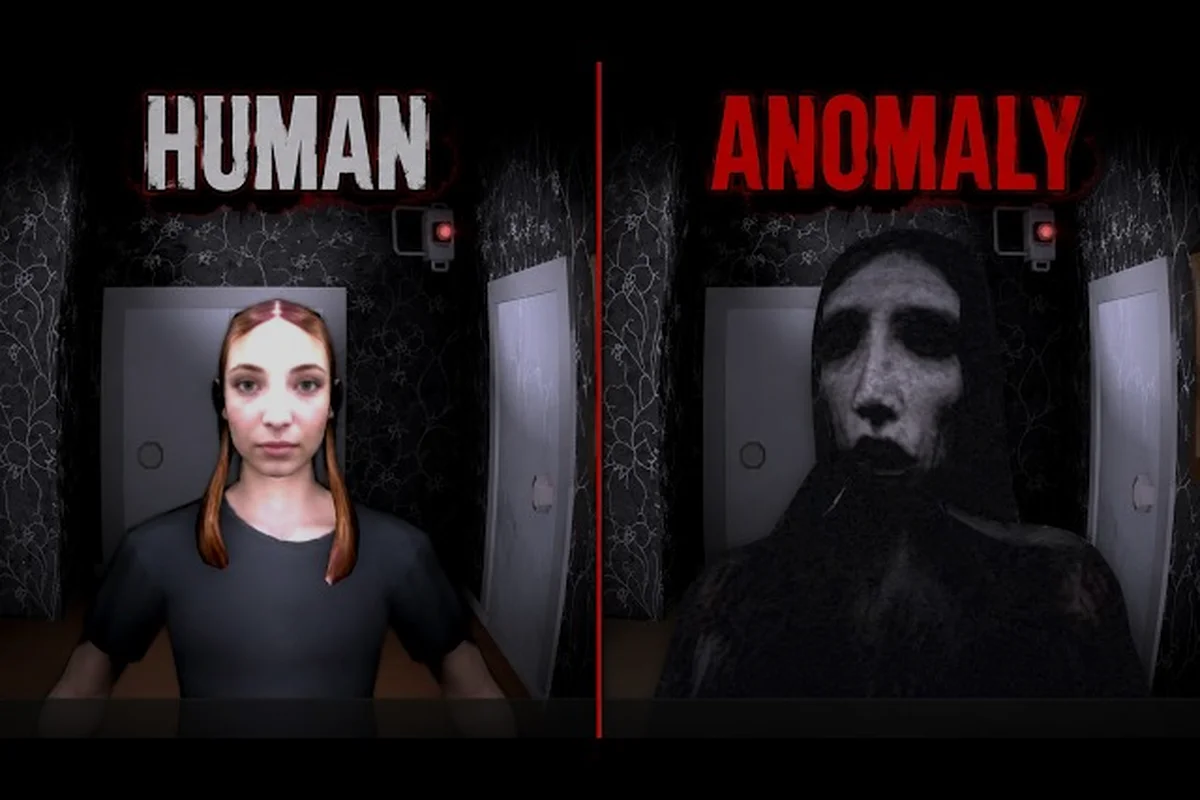
The Keep the Door Locked anomaly tells are the only thing standing between you and a gruesome death in this Roblox horror hit. With over 4.3 million visits since its May 2026 launch, this hotel-room survival game punishes players who can't distinguish a genuine guest from a Keep the Door Locked anomaly in seconds. Every knock could be your last, so learning to read the signs is non-negotiable.
The Core Anomaly Detection System
Every visitor who knocks on your door tells a story, and your job is to verify that story against the physical evidence in your room. The game's genius lies in its subtlety: anomalies aren't monsters that look obviously wrong, they're impostors who blend in perfectly until you catch them in a contradiction. Our anomaly guide walks through every entity type and how to counter it.
According to community data gathered from the official Roblox page and player reports, the detection system relies on three primary channels: visual room inspection, CCTV and night vision feeds, and audio analysis of the visitor's voice. Each channel gives you independent clues, and experienced players cross-reference all three before making a decision. If you are still learning the camera tools, our night vision guide covers how to use them correctly.
The core loop is simple: a visitor knocks, states their reason for being there, and you must verify their claim. A woman says her cat escaped into your room, so you check for the cat. A maintenance worker claims the oven is leaking gas, so you check the oven. The anomaly tells are the discrepancies between what they claim and what you actually observe.
Why Story Mismatches Matter Most
The most reliable Keep the Door Locked anomaly tells are story mismatches, because they require the game to generate a narrative that must align with your room's state. When a visitor references something that doesn't exist in your room, you've caught an anomaly.
Common story mismatches reported by players include: the door's locked state not syncing with the host's narration, or the monster's spawn location differing from the story's described room. These glitches often force players to re-check the door or backtrack, wasting precious time before the next knock. Community threads note these breaks in immersion are most frequent during multiplayer sessions, where latency can scramble the intended sequence.
-
A visitor mentions oven smoke when your room has no oven
-
A guest claims a faucet is leaking when your sink is perfectly dry
-
Someone describes a cat with a specific color that doesn't match the cat in your room
-
A worker references room numbers or floor details that don't match your location
These tells are the backbone of the detection system, and mastering them will save you more times than any other skill. The game deliberately makes these mismatches subtle, so you need to actively listen rather than passively hear. In practice, this means distinguishing a real footstep from a door creak or a distant hum, especially when the killer is stalking near your hiding spot. Veteran players often mute music to sharpen this focus, as even a single missed cue can force a premature lock change.
Visual Inspection Techniques
Your room is your evidence board, and you should inspect it thoroughly before answering any knock. The visual inspection checklist includes checking all appliances, looking for animals, verifying room layout, and scanning for anything unusual that might be a clue.
| Inspection Point | What to Check | Anomaly Indicator |
|---|---|---|
| Kitchen Area | Oven, stove, sink condition | Oven smoke with no oven present |
| Living Space | Furniture placement, windows | Objects moved from earlier check |
| Pets/Animals | Cat color, location, behavior | Color changes between sentences |
| Room Layout | Doors, walls, room number | Layout doesn't match visitor's claim |
| Appliances | Faucets, lights, electronics | Leaks or malfunctions that aren't real |
The table above shows the primary inspection points and what anomalies look like at each one. Visual confirmation is your first line of defense, but you must combine it with audio analysis because some anomalies only reveal themselves through voice.
Voice and Audio Anomaly Patterns
Not all Keep the Door Locked anomalies show up visually, which is why audio analysis is equally critical. The game uses voice modulation to signal danger, and players who rely only on visual checks will miss these tells entirely. Listening for pitch shifts or distorted speech during quiet moments often gives you the extra second needed to slam the door before the entity fully manifests.
The most dramatic audio tell is a voice flip, where a visitor's normal tone suddenly shifts to a demonic, gravelly growl mid-sentence. This is an instant red flag that requires no further verification. Community reports suggest this tell appears in roughly 15-20% of anomaly encounters, making it less common than story mismatches but far more obvious when it occurs.
Beyond the dramatic voice flip, subtler audio clues include faint footsteps that grow louder as the Entity nears, a low hum that intensifies near locked doors, and the occasional creak of floorboards signaling a shift in its patrol path. Players often rely on these cues to time their door re-locks, since visual confirmation can come too late.
-
Pitch inconsistencies where the visitor's voice changes between sentences
-
Background audio that doesn't match the claimed location
-
Echo or reverb that suggests the visitor isn't where they claim to be
-
Speech pattern breaks where the visitor stumbles or repeats oddly
CCTV and Night-Vision Discrepancy Clues
Some Keep the Door Locked creatures only appear on night vision or CCTV feeds, making these tools essential for catching anomalies that hide in plain sight. The game's camera system reveals ghostly figures, faceless shapes, and distorted heights that you'd never spot with the naked eye.
| Detection Tool | What It Reveals | Best Usage Window |
|---|---|---|
| Night Vision | Ghostly figures, heat signatures | When lights are off |
| CCTV Cameras | Faceless shapes, distorted proportions | Continuous monitoring |
| Door Peephole | Initial visitor appearance | Before opening |
| Room Camera | Hidden movement in blind spots | During visitor interaction |
The night vision mode is particularly valuable because it reveals entities that exist in a different visual spectrum. Players report seeing ghostly figures standing behind visitors, faceless shapes that appear human but lack facial features, and distorted height that makes creatures appear taller or shorter than they should be.
Critical Anomaly Types and Their Tells
Understanding the different Keep the Door Locked anomalies and their specific tells gives you a framework for rapid assessment. Each anomaly type has predictable behaviors, and knowing what to look for cuts your reaction time dramatically — our monster list catalogs every known entity with its signature tells. For example, a subtle flicker in the hallway light or a delayed door creak often signals a particular threat, letting you pre-position your camera or prepare a quick lock-down before the entity fully manifests.
The story mismatch anomaly is the most common type, where the visitor's narrative contradicts your room's reality. The visual distortion anomaly appears only through cameras or night vision. The audio anomaly reveals itself through voice changes. And the behavioral anomaly acts differently from how a normal visitor would.
The Story Mismatch Anomaly
This anomaly type is the bread and butter of the game, appearing in the majority of encounters. The visitor will make a claim about your room, and the claim will be false. A woman says her cat is in your room, but there's no cat. A man claims the oven is smoking, but you have no oven.
The key to catching these anomalies is active verification. Don't just listen to the story, physically check every claim they make. The game rewards thoroughness and punishes laziness, because some visitors will make multiple claims and only one will be false.
The Visual Distortion Anomaly
These Keep the Door Locked creatures are the ones that hide in camera feeds, appearing only when you're watching through night vision or CCTV. They might appear as faceless humanoids standing in corners, distorted figures that stretch and warp, or ghostly apparitions that flicker in and out of existence.
According to player reports, these anomalies are rarer but more dangerous because they're easy to miss if you're not actively monitoring your cameras. The game encourages you to check your feeds regularly rather than only when a visitor knocks, because some anomalies appear between visits.
Practical Detection Workflow
When a visitor knocks, you need a systematic approach that covers all your detection channels without wasting precious time. The following workflow has been refined by the community and represents the fastest reliable method for identifying Keep the Door Locked anomaly tells.
Step 1: Listen to the full story. Don't interrupt the visitor, because they'll reveal their claims naturally. Pay attention to every detail they mention, especially specific objects, colors, and locations. Interrupting can cause them to repeat themselves or stall, wasting precious time before the door lock timer begins. Veteran players note that noting these clues early helps you cross-check their story against the house's layout, making the final decision much smoother.
Step 2: Verify visual claims. Check every object the visitor mentioned. Look for the cat, check the oven, inspect the faucet. Physical verification is your most reliable tool, as the game’s randomizer can shift object states between visits, so a quick recheck often exposes a false report. Many players find that confirming the faucet’s drip or the oven’s heat saves them from a costly wrong guess.
Step 3: Check your cameras. Switch to night vision and CCTV feeds to see if any visual distortion anomalies are present. Look for figures, shapes, or movements that don't belong. Pay special attention to static flickers or subtle pixel shifts, as these often precede an entity's approach. Veteran players recommend sweeping each room twice—once with normal light, once with night vision—to catch anomalies that only appear in one mode.
Step 4: Analyze the voice. Replay what you heard and compare it to normal speech patterns. Listen for voice flips, pitch changes, or background audio that doesn't match. In Keep the Door Locked, a mimic’s voice often stutters or shifts mid-sentence, especially when it tries to imitate a friend’s call. Players who pause and re-listen can catch these glitches early, buying precious seconds to slam the door before the entity closes in.
Step 5: Make your decision. If any tell is present, deny entry. If everything checks out, open the door. When in doubt, err on the side of caution because a false rejection is better than death. Remember, even a single missed cue—like a delayed knock or an off-schedule visitor—can cost you the round, so trust your checklist over your nerves.
Building Your Detection Checklist
A written checklist helps you stay systematic, especially when you're new or when the pressure is high. The community recommends memorizing this rapid assessment checklist: it forces you to check door locks, listen for footsteps, and glance at the generator meter before each hiding spot. Veterans note that skipping even one step often leads to a panic sprint into a dead-end room, so keeping the list in your head beats fumbling with a notepad mid-chase.
-
Does the visitor's story match the room?
-
Is the cat the right color?
-
Is the oven actually smoking?
-
Is the faucet actually leaking?
-
Does the voice sound natural?
-
Are there figures on the cameras?
-
Does the visitor's height match what you see?
Each yes to a mismatch is a deny vote, and you should only open the door when every check passes. This checklist approach is particularly valuable for new players who haven't yet internalized the Keep the Door Locked anomaly tells through experience.
Advanced Detection Strategies
Once you've mastered the basics, you can move to advanced strategies that give you an edge in harder difficulties and late-night shifts. These techniques require more attention but dramatically improve your survival rate. For example, timing your door checks to the audio cues of the Entity’s footsteps lets you conserve battery, while pre-planned escape routes prevent panic when the lights flicker. Veterans often use these to survive the final hour, where mistakes are punished instantly.
The pre-emptive camera sweep involves checking your CCTV feeds before answering any knock, so you know the baseline state of your room. This makes it easier to spot anomalies because you'll notice anything that's changed. The story replay technique involves mentally replaying the visitor's story after they finish, comparing each claim against your memory of the room.
Managing Multiple Visitors
Some nights bring multiple visitors in quick succession, and managing the information load becomes a challenge. The key is to reset your mental state between visitors, treating each knock as a fresh encounter rather than carrying assumptions from the previous one.
Players report that confirmation bias is a real danger, where you expect a visitor to be real because the last one was, and you let your guard down. Always treat every visitor as a potential anomaly, regardless of how many real visitors you've already let in.
Difficulty Scaling and Anomaly Frequency
The game scales anomaly frequency with difficulty, meaning harder settings throw more Keep the Door Locked anomalies at you with subtler tells. On easier difficulties, tells are more obvious, giving you room to learn. On harder difficulties, the tells become more subtle, and you'll need every technique in your arsenal.
| Difficulty | Anomaly Frequency | Tell Subtlety | Recommended Strategy |
|---|---|---|---|
| Easy | Low | Obvious | Learn basic tells |
| Normal | Medium | Moderate | Full checklist approach |
| Hard | High | Subtle | Advanced camera + audio analysis |
| Nightmare | Very High | Very Subtle | Pre-emptive sweeps + rapid assessment |
The table above shows how difficulty affects anomaly frequency and tell subtlety, along with the recommended strategy for each level. As you progress, you'll need to combine all detection channels because no single tell will be reliable enough on its own.
Frequently Asked Questions
What are the most common Keep the Door Locked anomaly tells?
The most common tells are story mismatches where a visitor references objects that don't exist in your room, such as oven smoke when there's no oven or a leaking faucet that's perfectly dry. Voice changes, including demonic gravelly tones, and camera-only figures are also frequent indicators that you're dealing with a Keep the Door Locked anomaly.
Can Keep the Door Locked anomalies appear on CCTV only?
Yes, some Keep the Door Locked creatures only appear on night vision or CCTV feeds, appearing as ghostly figures, faceless shapes, or distorted heights. These anomalies are particularly dangerous because they're invisible to the naked eye, which is why experienced players constantly monitor their camera feeds rather than only checking when a visitor knocks.
How do I tell if a visitor is fake versus real?
You need to verify every claim the visitor makes against your room's actual state. Check for the cat they mentioned, inspect the oven they claimed was smoking, and look at the faucet they said was leaking. Cross-reference their story with your camera feeds and listen for voice changes. Any mismatch means you should deny entry.
Do anomaly tells change with difficulty settings?
Yes, higher difficulty settings make anomaly tells more subtle and increase the frequency of Keep the Door Locked anomalies. On easy difficulty, tells are obvious and easy to spot, while nightmare difficulty requires you to combine visual inspection, camera monitoring, and audio analysis to catch the increasingly subtle discrepancies.
What should I do if I'm unsure whether a visitor is an anomaly?
When in doubt, deny entry. A false rejection is always safer than letting in an anomaly, since the consequences are fatal. The game punishes careless decisions harshly, so erring on caution is your best strategy, especially while learning the tells.