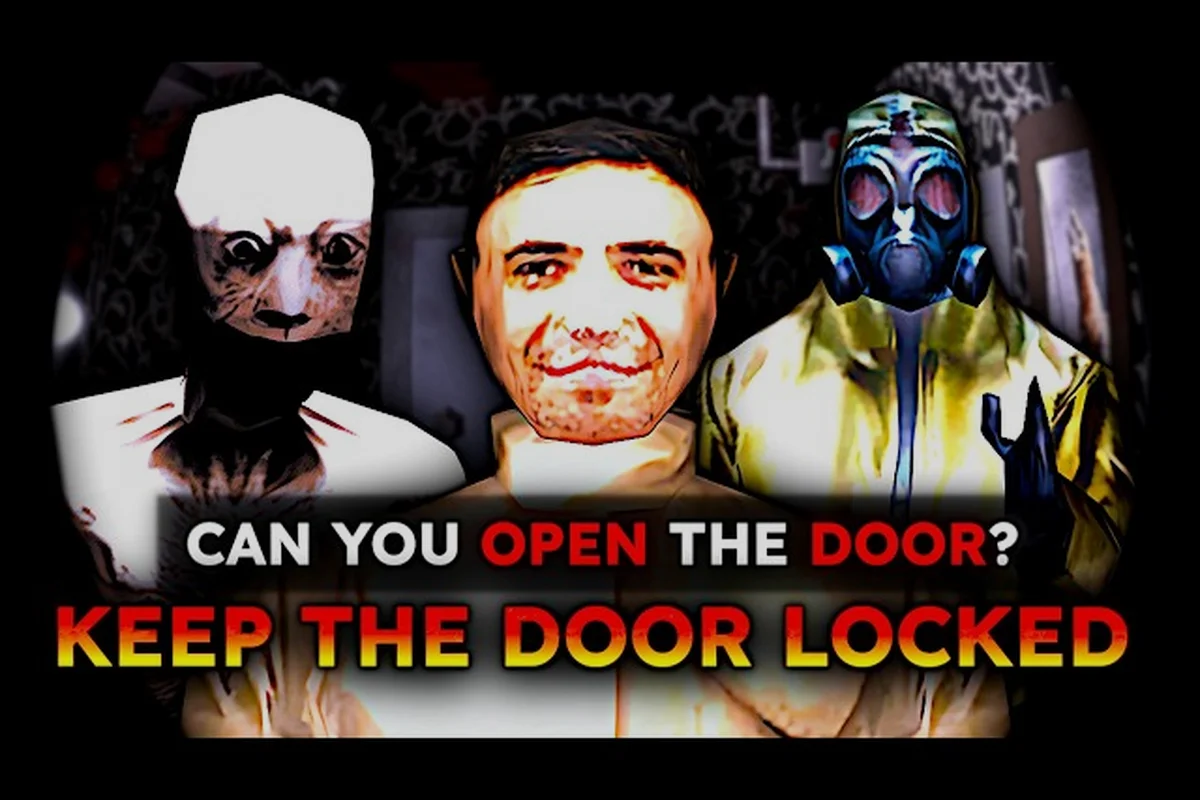
You're alone in a hotel room after midnight, and strangers keep knocking. Some need help; some are lying. Learning how to play Keep the Door Locked means mastering the monitor, trusting your ears, and knowing when to keep the door locked. This survival horror experience on Roblox has pulled in over 4.3 million visits since launching May 28, 2026, and the community is still uncovering its deepest secrets.
The core loop is deceptively simple: guests arrive, you check the camera feed, and you decide whether to open the door. One wrong decision ends your shift permanently. The tension comes from the anomaly system — creatures that mimic humans but break the rules in subtle ways. Your job is spotting those breaks before they spot you. This guide covers everything you need to know, from basic controls to advanced audio tricks, so you can survive your first night and beyond.
Introduction to the Core Gameplay Loop
The premise drops you into a dim hotel room with three tools: a monitor for cycling cameras, a night vision toggle, and a lock switch on the door. Strangers knock throughout the night, each with a story about why they need entry. Some are genuine guests who match the room's records; others are anomalies wearing human faces.
Your decision-making process follows a consistent rhythm that becomes second nature after a few shifts: each knock, creak, or shadow prompts a quick scan of the door’s integrity meter and your remaining lock repairs. Veteran players learn to prioritize checking the hallway camera before answering, since a single misjudged timing can leave you vulnerable during the entity’s faster attack windows. This steady cadence keeps panic at bay, turning chaos into a manageable routine.
-
Check the camera feed before touching the door — the hallway view reveals who's waiting
-
Listen to their story and compare it against what the camera shows
-
Verify details against room records and known guest patterns
-
Decide — open for safe visitors, keep the door locked for anything suspicious
The game rewards careful observation over speed. Safe visitors follow logical stories that match the room; anomalies contradict themselves or display impossible behaviors. According to community data, most new players lose their first run within the first ten minutes because they open the door before checking the feed. The first knock usually comes early in the night, so establish your camera-checking habit immediately.
What makes this game stand out is the escalating tension curve. Early nights feature obvious anomalies with clear tells, but later shifts introduce subtler creatures that require deep familiarity with the game's logic. The learning curve is steep but fair — every death teaches you something new about how the anomaly system thinks.
Keep the Door Locked How to Play: Controls and Setup
Before you can survive Night 1, you need to master the interface. The controls are straightforward, but using them efficiently under pressure takes practice. The monitor is your primary tool — it cycles through hallway cameras and gives you a clear view of who's approaching.
| Action | Control | Purpose |
|---|---|---|
| Cycle cameras | Mouse click / Q | Switch between hallway feeds |
| Night vision toggle | N | See in dark hallways, reveals some anomalies |
| Lock door | Spacebar / E | Secure or open the door |
| Listen for audio | Headphones recommended | Detect footsteps and breathing cues |
| Pause menu | Esc | Check settings and quit |
The night vision toggle deserves special attention because it changes how anomalies appear. Some creatures only reveal their true form under night vision, while others become harder to spot. Knowing when to toggle it is a core survival skill that separates experienced players from newcomers.
Your spawn room layout stays consistent between runs, which helps with memorization. The monitor sits on a desk near the bed, the door is directly across, and the window shows the parking lot. Veteran players recommend positioning yourself so you can see both the monitor and the door without turning around — this reduces reaction time when a knock comes.
Audio plays a larger role than most beginners expect. The game uses directional sound cues — footsteps approach from specific sides, breathing indicates proximity, and certain anomalies emit unique sounds. Using headphones isn't just recommended; it's practically required for higher difficulties. Our guide on using headphones effectively covers this in detail, but the short version is that stereo separation reveals which side of the hallway the visitor approaches from.
Keep the Door Locked Night 1: Step-by-Step Survival
Night 1 serves as your tutorial, but it doesn't hold your hand. The game throws a mix of safe guests and obvious anomalies at you, teaching through trial and error. Here's the exact sequence most successful first runs follow, based on community reports and verified walkthroughs.
First Knock Protocol
The first knock typically arrives within the first two minutes, often catching new players off guard. Your protocol should be identical every time: immediately check the door camera, confirm the entity’s presence, and then decide whether to hide or hold position. Veteran players note that consistent responses reduce panic, as hesitation during this early window frequently leads to unnecessary noise or a failed lock check.
-
Check the camera immediately — identify who's standing there
-
Toggle night vision if the hallway is dark
-
Listen for audio cues — heavy breathing or static means trouble
-
Compare the visitor's story against what you see
Safe visitors on Night 1 usually have simple requests: they forgot their key, they need to use the phone, or they're checking on a friend. Anomalies on this night tend to have impossible tells — a shadow that doesn't match their movement, eyes that reflect light oddly, or stories that contradict what the camera shows.
Sequencing Visitors When the Night Gets Busy
As the night progresses, visitors arrive more frequently. You'll sometimes have two or three waiting at different doors, forcing you to prioritize. The camera cycling system lets you check each hallway quickly, but you must remember which visitor is at which door.
| Visitor Type | Night 1 Frequency | Typical Behavior | Safe to Open? |
|---|---|---|---|
| Lost guest | Common | Asks for directions, matches room records | Yes |
| Maintenance worker | Common | Claims to fix something, has tools visible | Yes |
| Anomaly (obvious) | Common | Contradicts itself, wrong appearance | No |
| Anomaly (subtle) | Rare | Nearly perfect mimic, small detail off | No |
The key insight for Night 1 is that obvious anomalies outnumber subtle ones. The game wants you to learn the basics before introducing harder challenges. Take advantage of this by studying every anomaly you encounter — the patterns you learn here apply to later nights.
Surviving Until Dawn
The night ends when the clock reaches 6 AM. You don't need to open the door for everyone — in fact, keeping the door locked is always a valid choice. The game never punishes you for being cautious, only for being wrong. Safe visitors will leave and return later; anomalies will eventually give up and move on.
Your priority is staying alive, not maximizing guest satisfaction. Community testing shows that players who survive Night 1 typically open the door for 60-70% of visitors and reject the rest. That rejection rate might feel high, but it's the difference between finishing the night and becoming another cautionary tale.
Keep the Door Locked Secrets: Hidden Content and Unlocks
Beyond the core survival loop, the game hides substantial content for observant players. The secrets system rewards exploration and careful attention to environmental details, such as subtle audio cues or out-of-place objects. Some secrets are cosmetic, while others unlock new gameplay mechanics or alternative endings, often requiring players to solve multi-step puzzles across multiple runs to fully uncover them.
Secret Types and Locations
| Secret Type | How to Find | Reward |
|---|---|---|
| Hidden notes | Check drawers, under furniture | Lore background |
| Code entries | Match numbers to room doors | Extra currency |
| Alternative endings | Specific visitor sequences | New ending scenes |
| Achievement triggers | Complete special conditions | Cosmetic items |
The hidden notes appear in randomized locations each run, encouraging repeat playthroughs. According to player reports, collecting all notes in a single save unlocks a special epilogue that explains the hotel's backstory. The lore is surprisingly deep for a Roblox experience, touching on themes of isolation and paranoia.
How to Unlock Content
Content unlocks follow a progression system tied to nights survived and visitors correctly identified. The game tracks your accuracy rate, and certain thresholds trigger new content, such as alternate door skins or audio logs. Players often prioritize identifying the mimic early, since a single misclick can reset your streak and delay the next unlock.
-
Survive Night 1 — unlocks the lobby area for exploration
-
Correctly identify 20 anomalies — unlocks the anomaly codex
-
Survive Night 5 — unlocks hard mode with faster visitors
-
Complete all achievements — unlocks the secret ending
The anomaly codex deserves special attention because it functions as an in-game wiki. Each anomaly you correctly identify adds an entry with its appearance, behavior patterns, and known tells. This becomes invaluable for later nights when subtler creatures appear. Our complete anomaly guide catalogs every known creature type, but the codex gives you personalized data based on your own encounters.
The Headphone Connection
One of the most impactful secrets involves audio-based anomalies. Certain creatures only reveal themselves through sound — a knock that comes from the wrong direction, footsteps that don't match the camera view, or breathing that continues after the visitor leaves. Using headphones transforms these encounters from impossible to manageable.
The game's audio design rewards attentive listening. Stereo separation lets you pinpoint exactly where sounds originate, and some anomalies have unique audio signatures that give them away before you even see them. Players who rely on speakers miss these cues entirely, which is why the community strongly recommends headphones for any serious playthrough.
Keep the Door Locked Review: What the Community Says
The game has generated significant buzz since its launch, and community sentiment skews strongly positive. The review landscape shows consistent praise for the atmosphere and tension, with some criticism directed at the difficulty curve. Many players note that the early rooms teach mechanics well, but the sudden spike in monster speed around the basement often forces trial-and-error deaths, a point frequently echoed in forum threads.
Strengths According to Players
-
Atmosphere — the hotel setting feels genuinely unsettling, with lighting and sound design working together to create constant dread
-
Replayability — randomized visitor patterns and secret hunting keep runs fresh
-
Fair difficulty — deaths always teach something, never feel arbitrary
-
Active development — the developer (Hotel Room Services) has released regular updates addressing feedback
Criticisms and Workarounds
| Criticism | Community Response | Workaround |
|---|---|---|
| Steep learning curve | Tutorial could be clearer | Read guides, watch walkthroughs |
| Some anomalies too subtle | Frustrating for casual players | Use night vision more aggressively |
| Limited content at launch | More added post-release | Explore secrets for extra content |
| Performance issues | Occasional lag on low-end PCs | Lower graphics settings |
The active player count remains healthy, with over 10,000 players online at peak times according to the Roblox game page. This matters for the experience because the game includes community-driven events that require coordinated participation, such as timed door-lock challenges where groups must synchronize their actions to survive. Players often note that these peak hours also shorten matchmaking queues, making it easier to jump into a full lobby and test strategies against a live crowd.
Is It Worth Playing?
For fans of psychological horror and deduction games, the answer is a clear yes. The game delivers a tight, tense experience that respects player intelligence. It doesn't rely on jump scares — the horror comes from the slow realization that something is wrong, that the person at your door isn't quite human.
The game's longevity depends on content updates, and the developer has shown commitment to expanding the experience, regularly patching in new threats and tweaking door mechanics to keep veterans on edge. If you enjoy games like Five Nights at Freddy's but want something more mechanically involved, this fits the bill perfectly, especially since managing battery drain and audio cues adds a layer of strategy beyond simple timing.
Advanced Tips: Mastering the Anomaly Detection
Once you've survived your first few nights, the real challenge begins. Advanced anomaly detection requires pattern recognition that goes beyond simple tells. Experienced players track door-knock rhythms and light flicker intervals, noting how anomalies shift their behavior after Night 3. This means watching for subtle timing changes rather than reacting to obvious sounds, since a single missed cue can force a costly door check. Here's what experienced players focus on:
Behavioral Analysis
Anomalies don't just look wrong — they act wrong. Pay attention to how visitors move, pause, and react: a genuine guest will follow a steady path toward the exit, while an anomaly may freeze mid-step, twitch, or loop back toward the door. In Keep the Door Locked, these subtle behavioral tells are your only warning before a breach, so watch for unnatural hesitations near the keypad or sudden reversals that break the pattern.
-
Safe guests walk with purpose, maintain consistent speed, and react naturally to being observed
-
Anomalies often hesitate at doorways, move in unnatural bursts, or fail to acknowledge the camera
-
Audio mismatches — footsteps that don't sync with visual movement are a dead giveaway
The camera-only anomalies deserve special mention. Some creatures only appear on certain camera feeds, meaning you might miss them entirely if you're not cycling regularly. Our guide on camera usage covers the technical details, but the key takeaway is that consistent camera rotation is non-negotiable.
The Trust No One Mindset
The game's tagline — trust no one — isn't just flavor text. It's the core strategy. Every visitor deserves suspicion until proven safe, especially since a single wrong door unlock can end your run instantly. This mindset feels paranoid, but it's the difference between surviving and becoming another statistic, as veterans often warn that hesitation or misplaced kindness is what gets you killed.
| Mindset | Survival Rate | Notes |
|---|---|---|
| Trust everyone | Low | Anomalies exploit your naivety |
| Trust no one | High | You'll reject some safe guests, but survive |
| Balanced approach | Medium | Works if your detection skills are sharp |
The balanced approach works best once you've internalized the anomaly patterns. You'll learn to identify safe guests quickly, allowing you to help them while maintaining vigilance. But until that point, defaulting to suspicion keeps you alive, since a single misread guest can drain your sanity or trigger a lockdown. Experienced players often toggle between helping and hiding based on the door's audio cues, a rhythm that only emerges after several failed runs.
Night Vision Mastery
Night vision isn't just a darkness filter — it's an anomaly detection tool. Some creatures only reveal their true form under night vision, while others become invisible when you toggle it. Learning when to use it requires understanding which anomalies respond to light.
Community testing suggests that night vision reveals approximately 40% of anomaly tells, making it essential but not sufficient. The remaining 60% come from behavioral analysis and audio cues, such as subtle door creaks or irregular footsteps. Combining all three detection methods gives you the best survival odds, especially during late-game lockouts where battery drains faster.
Frequently Asked Questions
What is the best strategy for Keep the Door Locked night 1?
Surviving night 1 requires a cautious approach: always check the camera before opening the door, toggle night vision in dark hallways, and reject any visitor whose story contradicts what you see. Safe guests will return later, so prioritize survival over helpfulness. Most players succeed by opening the door for roughly 60-70% of visitors.
How do I use headphones effectively in Keep the Door Locked?
Headphones reveal directional audio cues that speakers miss, including which side of the hallway footsteps approach from and subtle breathing sounds from nearby anomalies. Set your audio to stereo mode and keep volume moderate so you can distinguish between ambient noise and actual visitor sounds. Some anomalies emit unique audio signatures that give them away before you see them.
What secrets exist in Keep the Door Locked?
The game hides notes, code entries, alternative endings, and achievement triggers throughout the hotel. Hidden notes appear in randomized locations and unlock lore backstory when collected. Code entries match numbers to room doors for extra currency. Alternative endings require specific visitor sequences, and completing all achievements unlocks the secret ending.
How do I unlock content in Keep the Door Locked?
Content unlocks through progression milestones: surviving night 1 unlocks the lobby, correctly identifying 20 anomalies unlocks the codex, surviving night 5 unlocks hard mode, and completing all achievements unlocks the secret ending. The anomaly codex functions as an in-game wiki that tracks your personal encounters.
Is Keep the Door Locked worth playing in 2026?
Yes, particularly if you enjoy deduction-based horror. The game has maintained a healthy player base since its May 2026 launch, with over 4.3 million visits and active community events. The developer regularly updates content, and the core loop of spotting anomalies remains engaging across multiple playthroughs.