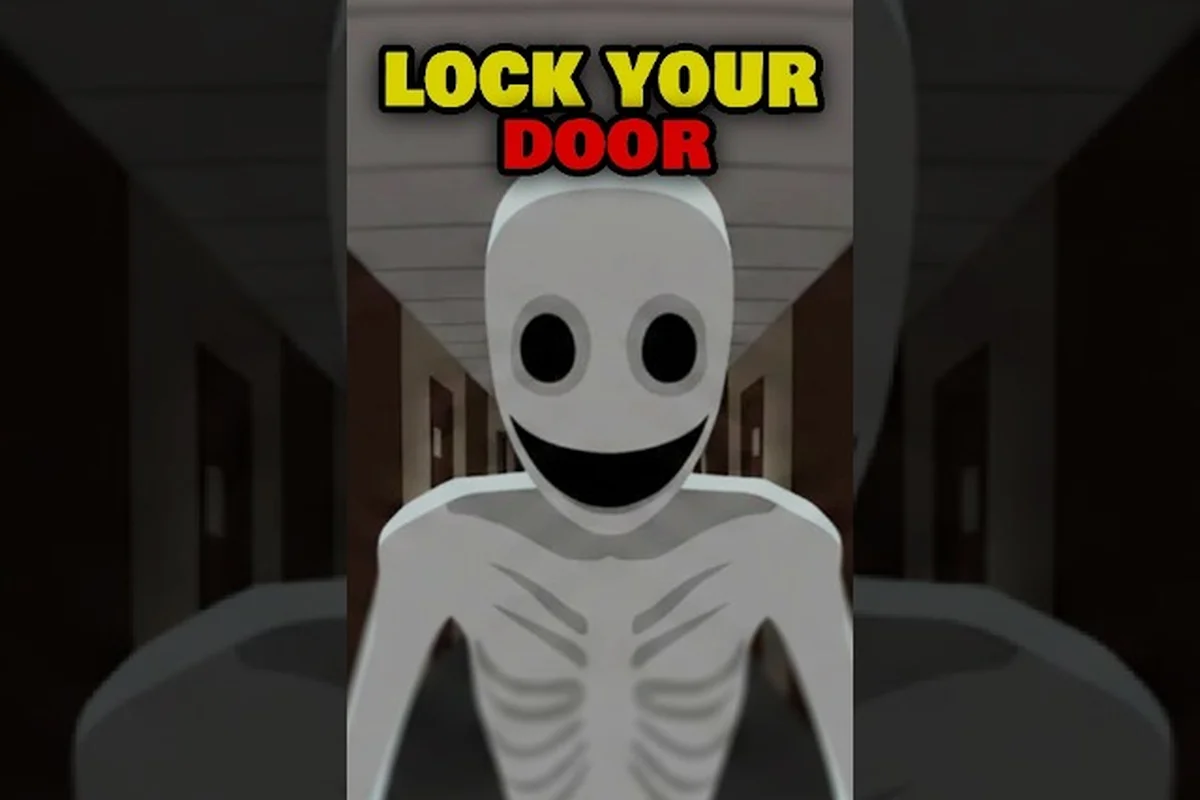
Midnight. A knock at your hotel room door. Someone needs help. Someone is lying. Your only tools are a camera monitor and a lock toggle, and one wrong decision may be your last. That is the premise of Keep the Door Locked, the Roblox anomaly horror game that has drawn over 4.3 million visits since its launch in late May 2026.
The core challenge is survival through pattern recognition, because Keep the Door Locked tips for beginners revolve around one truth: anomalies always contradict themselves, while safe visitors follow logical stories. This matters because most new players die within the first three knocks, not from lack of reflexes, but from failing to check evidence before acting. Get the latest community-tested strategies below, and you will spot the fakes before they reach your door.
Core Survival Mechanics Every Beginner Must Master
Your hotel room is a compact survival arena with a fixed layout: the bed, the door, and the security monitor that sits as your primary information tool. The first knock usually comes early in the night, which means you have minimal warm-up time to learn the interface. The game launched on May 28, 2026, and players quickly identified the three-step verification loop as the foundation of every successful run.
The monitor serves two critical functions that beginners often ignore under pressure. First, it cycles through hallway cameras so you can see who is standing outside. Second, it has a night vision toggle that reveals details invisible in standard lighting, which matters because some anomalies hide visual inconsistencies until you switch modes. The lock toggle on the door is your final barrier, and using it wisely separates cautious survivors from reckless victims.
Here is the verified sequence that experienced players follow on every single knock, a routine honed through countless failed runs. This precise order—checking the peephole, then the side windows, and finally the closet—minimizes wasted time while maximizing survival odds. Veterans swear by this rhythm, as hesitating even a second after the third knock often triggers the entity’s instant-kill animation.
-
Check the hallway camera feed before touching the door, because the monitor reveals the visitor's physical state and location.
-
Toggle night vision to scan for missing shadows, unnatural stillness, or objects that should not exist in the hallway.
-
Confirm the visitor's stated reason against what the camera actually shows, and look for missing evidence like a claimed object that is not visible on screen.
-
Use the lock toggle only after you complete your assessment, keeping the door secured while you think through the logic.
-
Refuse loudly and keep the lock engaged if anything feels off, because hesitating at the door gives anomalies the reaction window they need.
According to community data from verified YouTube playthroughs, including the full walkthrough by TheKacperosEN, the first knock pattern is deliberately gentle to lull you into complacency. Many beginners open immediately out of politeness, which is exactly what the game punishes. The security monitor exists for a reason, and the 10K+ players online at peak hours are proof that the daily challenge keeps drawing crowds.
Understanding the Camera Monitor Interface
The camera interface is more than a simple viewing window, because it actually dictates your entire risk assessment process. Players who master the monitor early report survival rates that are dramatically higher than those who rely on intuition alone. The interface cycles through multiple hallway cameras, and each angle can reveal or hide different clues about the visitor.
Night vision is the single most underused feature among new players, based on community reports from early testing. It costs nothing to toggle and reveals subtle differences in how anomalies render compared to human visitors. The trade-off is that night vision has a slight refresh delay, which means you need to toggle it before the visitor gets too close to the camera, rather than after they are already knocking.
The Lock Toggle Timing
Every second you hold the door locked adds safety, but it also delays your ability to interact with valid visitors who may offer rewards or story progression. The lock toggle timing becomes a strategic decision rather than a binary choice. Experienced players keep the door locked until they complete their camera assessment, then unlock briefly to interact or refuse clearly.
The game punishes neither locking nor refusing outright, but it does punish inconsistency. If a visitor knocks, you check the camera, and then you open without clear intent, the game reads that as hesitation, which seems to trigger more aggressive behavior from subsequent visitors. Community walkthroughs consistently show that a decisive response pattern extends your survival time across the full night.
Spotting Anomalies and Recognizing Safe Visitors
Anomalies are the heart of Keep the Door Locked, and learning to identify them is the difference between surviving until sunrise and becoming another cautionary tale in the hotel registry. The game uses a logical consistency test that turns every knock into a mini-mystery. Safe visitors follow a story that matches the evidence, while anomalies contradict themselves in subtle but detectable ways.
The most common anomaly pattern reported by the community is the missing object claim. A visitor may say they left their key in the hallway, but your camera shows an empty corridor. Another frequent pattern involves unreachable locations, where a visitor claims to have come from a direction that has no door or entrance visible on your camera feed. These logical breaks are the game's way of telling you that something is wrong, without ever being explicit about it.
Here are the verified red flags that veteran players watch for: subtle audio shifts, door-handle jiggles, and a sudden drop in ambient light. These cues often signal an imminent attack, so seasoned survivors memorize their timing and position themselves near escape routes. Newer players overlook these signs, but regulars treat them as non-negotiable warnings.
-
Impossible requests: Visitors asking for items or help that the hotel layout cannot support, such as someone claiming to have lost a wallet in a room that the camera shows as a solid wall.
-
Physical inconsistencies: Shadows pointing the wrong direction, reflections that do not match the person standing there, or visitors who appear slightly distorted under night vision.
-
Story contradictions: Narratives that change details between statements, or visitors who cannot answer simple follow-up questions about the room they claim to occupy.
-
Timing anomalies: Visitors who arrive at impossible speeds between camera checks, or who appear in a location that was empty moments earlier.
-
Behavioral rigidity: The same phrase repeated verbatim across multiple knocks, which suggests a looping pattern rather than genuine human behavior.
According to the official Keep the Door Locked Roblox page, the game pits you against strangers who may be telling the truth or lying, and the consequence for misjudgment is immediate. This makes each encounter a high-stakes gamble that you can tilt in your favor through systematic observation rather than guesswork.
The Logical Consistency Test
Every visitor in Keep the Door Locked presents a story, and your job is to verify that story against observable reality. Safe visitors follow logical stories that match the room layout and camera evidence, while anomalies contradict themselves in ways that become apparent the longer you watch. The test works because the game consistently applies this rule across all difficulty levels.
The key is to build a mental model of the hotel floor during your first few minutes. Note which doors exist on which side, where the stairwell is, and what the camera angles actually show. When a visitor claims to have come from the east corridor, but your camera shows the east corridor is a dead end, the logic fails immediately. These spatial contradictions are the most reliable anomaly indicators.
Common Beginner Mistakes with Visitor Identification
New players often fail not because they cannot spot anomalies, but because they second-guess their own observations. The camera shows clear evidence, yet they open the door anyway, hoping that the visitor is actually safe. This is the most common fatal error reported in community discussions about the game.
Another frequent mistake is over-relying on audio cues instead of visual evidence. The knocking sound itself is identical for safe visitors and anomalies, which means audio gives you zero information. Beginners who try to guess based on knock rhythm or intensity are essentially rolling dice, because the game deliberately removes audio variance as a reliable tell. The only dependable data source is the camera feed.
Gameplay Modes and Difficulty Progression
Keep the Door Locked offers multiple gameplay modes that scale the challenge from gentle introduction to brutal survival pressure. The full walkthrough experience guides you through the hotel's narrative layers, while the anomaly mode introduces randomized visitor patterns that keep even veteran players on edge. Understanding how difficulty scales helps beginners choose the right starting mode.
The game structures its night into waves of visitor encounters, with intensity ramping as the hours progress. Early visitors tend to be straightforward, giving you room to learn the mechanics. Late-night visitors arrive with more complex stories, tighter timing windows, and more convincing lies, which means your observation skills must be sharp by the final stretch.
Here is how the game modes compare based on community reports and verified gameplay footage: Solo play emphasizes stealth and resource conservation, while multiplayer shifts focus to coordinated door-locking rotations and baiting the entity. Players frequently note that the Hard mode’s reduced flashlight battery forces tighter timing, and the community’s consensus is that Normal mode offers the best balance for learning the map’s spawn patterns.
| Mode | Visitor Difficulty | Timing Pressure | Best For | Risk Level |
|---|---|---|---|---|
| Story Mode | Low-to-moderate pacing | Relaxed between knocks | First-time players learning mechanics | Low |
| Anomaly Mode | Random and unpredictable | Moderate stress | Players seeking replay value | Medium |
| Nightmare Mode | Aggressive and deceptive | Tight survival windows | Veteran players testing reflexes | High |
| Endless Mode | Scales with your streak | Growing intensity | Long-session challenge hunters | Variable |
Each mode uses the same core mechanics but adjusts the anomaly-to-safe-visitor ratio and the time available between knocks. According to player experience documented in YouTube walkthroughs like the one from VendoPlus, Anomaly Mode is the community's recommended progression step after you survive a full Story Mode night.
Choosing Your Starting Mode
Beginners should start with Story Mode, because it introduces visitor logic patterns at a pace that allows methodical learning. The relaxed timing between knocks gives you room to check cameras thoroughly, toggle night vision, and verify stories without panic. This foundation matters more than any advanced technique, because it builds the observation habit that all other modes require.
Anomaly Mode is the next step once Story Mode becomes predictable. It reshuffles visitor patterns, removes the narrative consistency that provides hints, and forces you to rely purely on observation skills. Players who transition to Anomaly Mode report a steeper learning curve, but the skills they develop translate directly to the higher-pressure modes.
Difficulty Scaling and Visitor Intensity
As the night progresses, the game increases visitor intensity through multiple mechanics. Knock frequency rises, stories become more elaborate, and anomalies get better at mimicking human behavior. The first few visitors may have obvious logic breaks, but late-night anomalies can pass multiple checks before revealing their nature.
The scaling also affects your resource margin. In early hours, a single mistake costs you one visitor. In late hours, one mistake can trigger a chain reaction of aggressive behavior that ends the run. This escalation is why the Keep the Door Locked full walkthrough from AnyaRoblox emphasizes maintaining a consistent observation routine from the very first knock, never relaxing because the early game feels easy.
Beginner Strategy Guide for Your First Nights
Your first few nights in Keep the Door Locked should focus on building habits rather than achieving perfect survival. The game rewards methodical observation far more than reflexes, because every visitor gives you time to think if you use it properly. Players who survive their first night typically follow a consistent routine that they repeat for every single knock.
The strategy that works best for beginners combines a fixed response order with clear rules about when to open or refuse. Community testing suggests that players who set a fixed knock-response order survive longer because they eliminate hesitation from their decision loop. The recommended order is camera first, night vision second, door last, and this sequence becomes second nature after a few nights.
Here is a step-by-step framework for your first five nights: start by memorizing the camera map’s blind spots, then prioritize door checks over light usage to conserve power. Each night raises the entity’s aggression, so alternate between monitoring the hallway and the closet, and always listen for the telltale creak before locking down. Veterans note that staying still in the corner reduces detection, making the final hours more survivable.
-
Night One: Focus purely on camera checks and building the three-step verification habit.
-
Night Two: Start using night vision on every visitor to understand the visual differences it reveals.
-
Night Three: Practice refusing visitors, because saying no is always a safe option when evidence is unclear.
-
Night Four: Begin testing visitor stories against your mental map of the hotel floor layout.
-
Night Five: Combine all skills into a fluid routine that handles visitors confidently.
The key insight is that refusing is always safer than guessing. If you cannot verify a visitor's story beyond doubt, keeping the door locked is the correct choice. The game may not reward you for refusing a safe visitor, but it will never punish you as harshly as opening for an anomaly.
Building the Camera-First Reflex
The most important habit is checking the monitor before touching the door. Every visitor is visible on camera well before they reach your door, which means you have advance warning if you use it. Players who develop this reflex rarely die to surprise attacks, because they always know who is approaching.
The reflex becomes automatic after several nights of practice, and it transforms the game from jump-scare anxiety into a measured puzzle-solving experience. The Keep the Door Locked Anomaly full walkthrough demonstrates this approach, showing how a calm, methodical player handles even the game's most deceptive visitors.
Applying the Lock Toggle Strategy
Your lock toggle is a strategic resource rather than a binary switch. Keeping the door locked costs nothing, but it blocks potential interactions. The optimal strategy is to keep the door locked during your camera assessment, then briefly unlock when you decide to interact or refuse. This minimizes the window in which anomalies can react to your presence.
The lock toggle also affects visitor behavior. Visitors who find the door locked may knock again, while visitors who find it unlocked may attempt entry. This means your lock state is part of the information you send to the visitor, and experienced players use it strategically to control encounter pacing.
Common Fatal Mistakes and How to Avoid Them
Every beginner makes mistakes in Keep the Door Locked, but the fatal errors consistently appear across player reports. Understanding these patterns before they happen gives you a significant survival advantage. The most dangerous mistakes are usually decision-based rather than reflex-based, which means they are entirely preventable with the right approach.
The list below ranks the most common fatal mistakes according to community discussions and player experience reports, with the deadliest first: these errors consistently end runs in the early minutes, often before players can reach the first safe room. Prioritizing the top entries helps you avoid the instant-death traps that veterans warn about in the game’s chat, while lower-ranked mistakes still cost lives but allow for a brief reaction window.
| Mistake | Why It Kills You | How to Fix It | Survival Impact |
|---|---|---|---|
| Opening before camera check | Removes your only warning system | Build camera-first reflex | Critical |
| Ignoring night vision | Misses subtle anomaly tells | Toggle on every visitor | High |
| Trusting audio cues | Audio is deliberately unreliable | Rely only on visual evidence | High |
| Hesitating at the door | Gives anomalies reaction window | Commit to refusal or opening | Medium |
| Forgetting lock toggle | Loses strategic control | Keep locked during assessment | Medium |
The hesitation factor deserves special attention because it is the most subtle killer. When you unlock the door, you should have already made your decision. Players who unlock, then pause to think, create an opening that the game seems to exploit. The routine of camera, night vision, lock toggle, then decision eliminates this vulnerability.
Why Hesitation Kills More Than Wrong Decisions
Hesitation combines the worst of both worlds: you lose the safety of a locked door while failing to gain the benefits of a decisive interaction. Committed choices, whether to open or to refuse, at least produce outcomes aligned with your assessment. Hesitation produces outcomes aligned with neither, and the game appears to punish this ambiguity.
The fix is simple: make your decision before touching the door. Your camera assessment should produce a confident verdict, and then your door action should execute that verdict without delay. Players who adopt this mindset report that their survival rates climb immediately, because the game stops punishing their uncertainty.
The Sunk-Cost Trap
Some players refuse multiple visitors, then feel pressure to open for the next one because they fear "missing out" on a reward. This is the sunk-cost trap, and it is a reliable way to die. Every visitor is an independent decision, and the fact that you refused someone earlier does not obligate you to open for someone later.
The game rewards consistency, not flexibility. Players who maintain a strict verification standard across the entire night survive longer than players who relax their standards as the hours pass. The sunken-cost trap is particularly dangerous in the late night, when fatigue sets in and decision quality drops.
Night-by-Night Beginner Progression Plan
Your progression through the first week of Keep the Door Locked should follow a structured plan that builds skills cumulatively. The night-by-night progression approach ensures that you master the fundamentals before facing advanced challenges. Each night should have a clear goal beyond mere survival.
This progression targets the key skill sets that veteran players cite as the foundation of success: observation, verification, decision speed, resource management, and pattern recognition. Here is the recommended Keep the Door Locked beginner guide structure for your first week:
| Night | Primary Focus | Success Metric | Next Skill Unlocked |
|---|---|---|---|
| Night 1-2 | Camera-first reflex | Check camera before every visitor | Night vision mastery |
| Night 3-4 | Visitor story verification | Refuse all unverified visitors | Decision confidence |
| Night 5-6 | Full observation loop | Use all three steps on every knock | Timing optimization |
| Night 7 | Combined survival | Survive with zero mistakes | Anomaly Mode readiness |
Tracking Your Survival Metrics
Keeping a simple journal of your runs helps identify patterns in your decision-making. Survival metrics like which visitors you opened for, which you refused, and which choices ended your run reveal your personal weak points. Players who track this data improve faster because they target specific flaws rather than practicing the same mistakes across multiple nights.
Players who find the step-by-step approach valuable should also check the detailed first-night guide for a deeper walkthrough of the opening hours. That resource covers the exact spawn room layout and early-night camera positioning in more granular detail than this overview.
Transitioning to Advanced Modes
Once you survive a full night with zero unforced errors, the game opens up. Advanced modes test the skills you built during your beginner phase under more intense conditions. The transition should happen only when your survival comes from deliberate verification rather than luck with safe visitors.
Consider the progression from this beginner resource to the full anomaly walkthrough once you feel ready for randomized visitor patterns and higher pressure. That guide assumes basic survival competence and focuses on advanced anomaly detection techniques, such as distinguishing subtle audio cues and visual glitches under time constraints. Many players find that mastering these patterns first reduces panic during later, faster visitor cycles.
Frequently Asked Questions
What is the most important Keep the Door Locked tip for beginners?
Always check the security camera monitor before touching the door. The camera reveals the visitor's identity and location, and it gives you critical seconds to assess the situation. Never open the door based on knocking audio alone, because the sound carries no tell that separates safe visitors from anomalies.
How do I know if a visitor is an anomaly?
Compare the visitor's stated story against what the camera actually shows. Safe visitors follow logical stories that match the hotel layout, while anomalies contradict themselves with impossible requests or missing evidence. Use night vision to check for physical inconsistencies, and always refuse visitors whose stories cannot be independently verified.
What should I do if I am unsure about a visitor?
Keep the door locked and refuse clearly. Refusing is always safer than guessing, and the game punishes hesitation more than a decisive negative response. Players who develop a strict verification standard survive longer overall, even if they occasionally refuse safe visitors.
What are the game modes in Keep the Door Locked?
The game features Story Mode, Anomaly Mode, Nightmare Mode, and Endless Mode. Beginners should start with Story Mode to learn visitor logic patterns, then progress to Anomaly Mode for randomized encounters. The advanced modes add intensity but rely on the same core observation skills.
Is refusals penalized in the game?
Refusing a safe visitor is never penalized, but it costs potential rewards. Opening for an anomaly can end your run instantly, so refusal is the safer default when evidence is unclear. Observation beats instinct, and decisive refusal always outweighs hesitant opening.